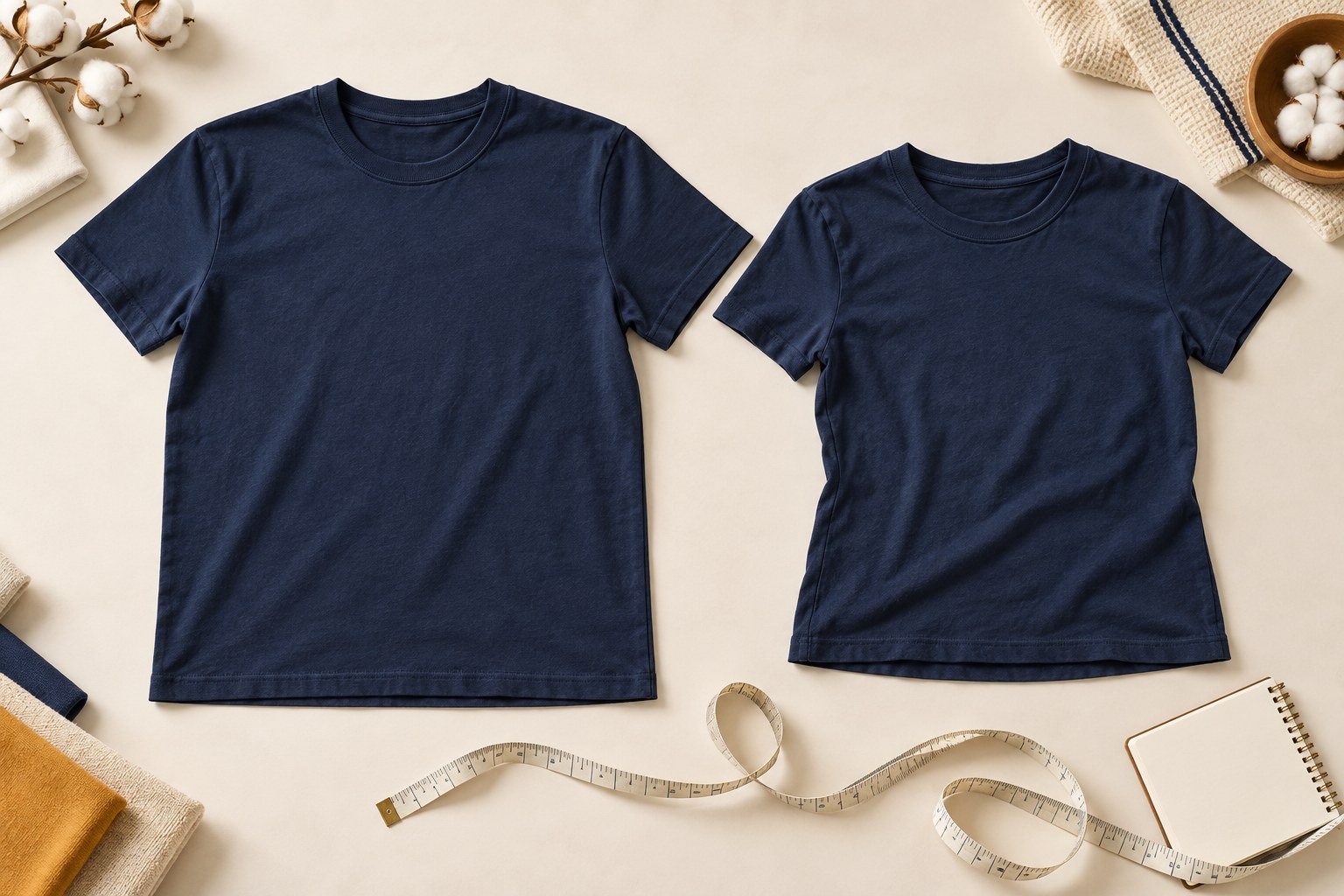
T-shirt dimensions can change when the knit structure relaxes and responds to washing and drying. Fabric construction and processing affect that response. Side-seam twist is a separate shape change, so record it separately. To judge a sample, compare the same length and width points before and after a defined wash-and-dry routine, then check the washed garment's fit and seam position.
A T-shirt starts with an approved pattern, fabric and sample. The factory prepares and cuts the fabric, keeps the pieces identified by size and color, adds any decoration at the planned stage, sews the garment, finishes it, checks it against the approved references, then folds, labels and packs it. Each step can only be judged against a specification that was agreed before bulk production.
There is no universal T-shirt lead time. GOODTEX publishes a general sample-development range of 7–15 days depending on style complexity, while its FAQ gives a broad 30–60-day production reference that varies with order quantity. Treat both as planning references, not promises. Your order needs a style-specific schedule covering approvals, material readiness, bulk production, inspection, packing and transport.
Create one label and packing schedule for every component: main label, size label, fiber/origin label, care label, hangtag, barcode sticker, unit pack and shipping carton. For each item, specify content, dimensions, material, colors, attachment, placement, SKU mapping and approved artwork version. Approve actual samples and scan production barcodes before bulk packing.
Inspect the correct order against the latest approved tech pack and physical sample. Confirm material and shade, workmanship, measurements, decoration, labels, quantity, assortment and packing. Define critical, major and minor defects in advance. If you use AQL sampling, state the standard, inspection level, AQL values and lot definition in the inspection instruction rather than asking for a generic “AQL check.”
A custom T-shirt MOQ is the lowest quantity a supplier will accept for the specified production route. Ask whether it applies per order, style, fabric, color, artwork or SKU. A low total MOQ can still contain a high minimum per color. After asking "What is your MOQ?" ask the supplier which part of the specification sets it.
We use cookies to offer you a better browsing experience, analyze site traffic and personalize content. By using this site, you agree to our use of cookies. Privacy Policy


 09 2026-10
  30 2026-09
  19 2026-09
  11 2026-09
  11 2026-09
  22 2026-08