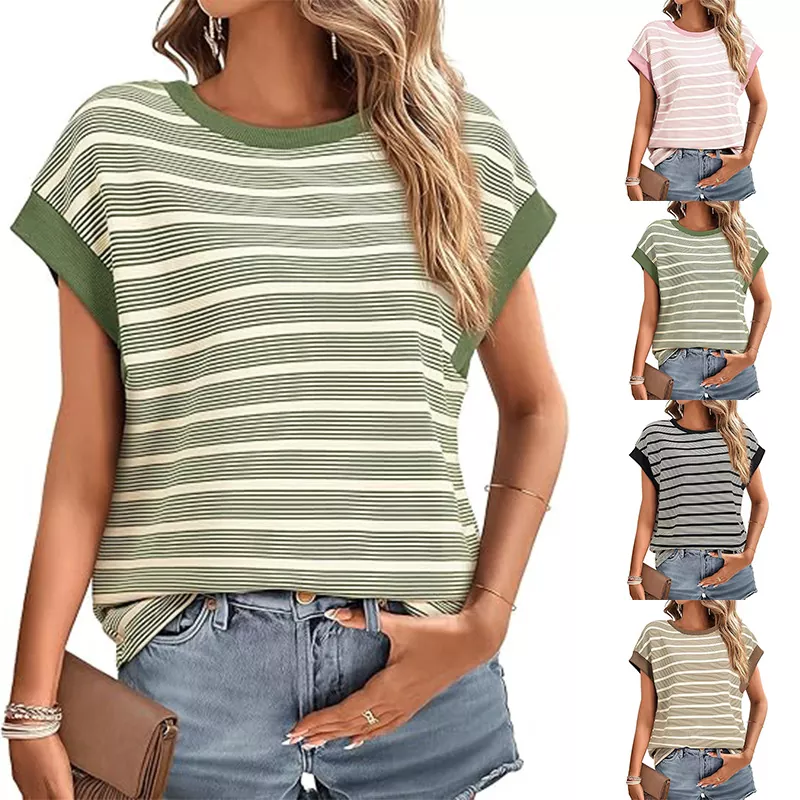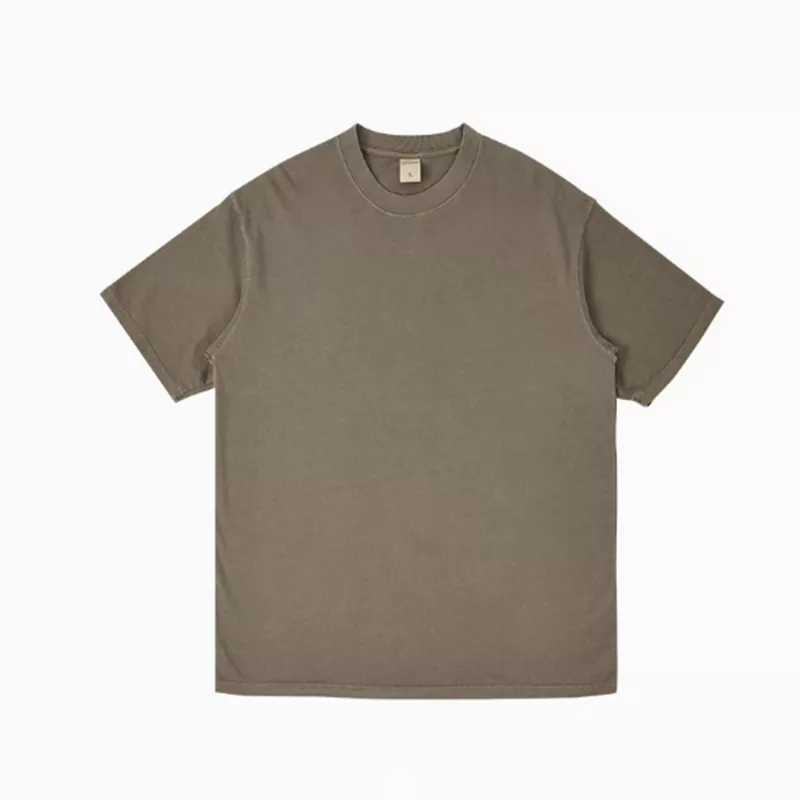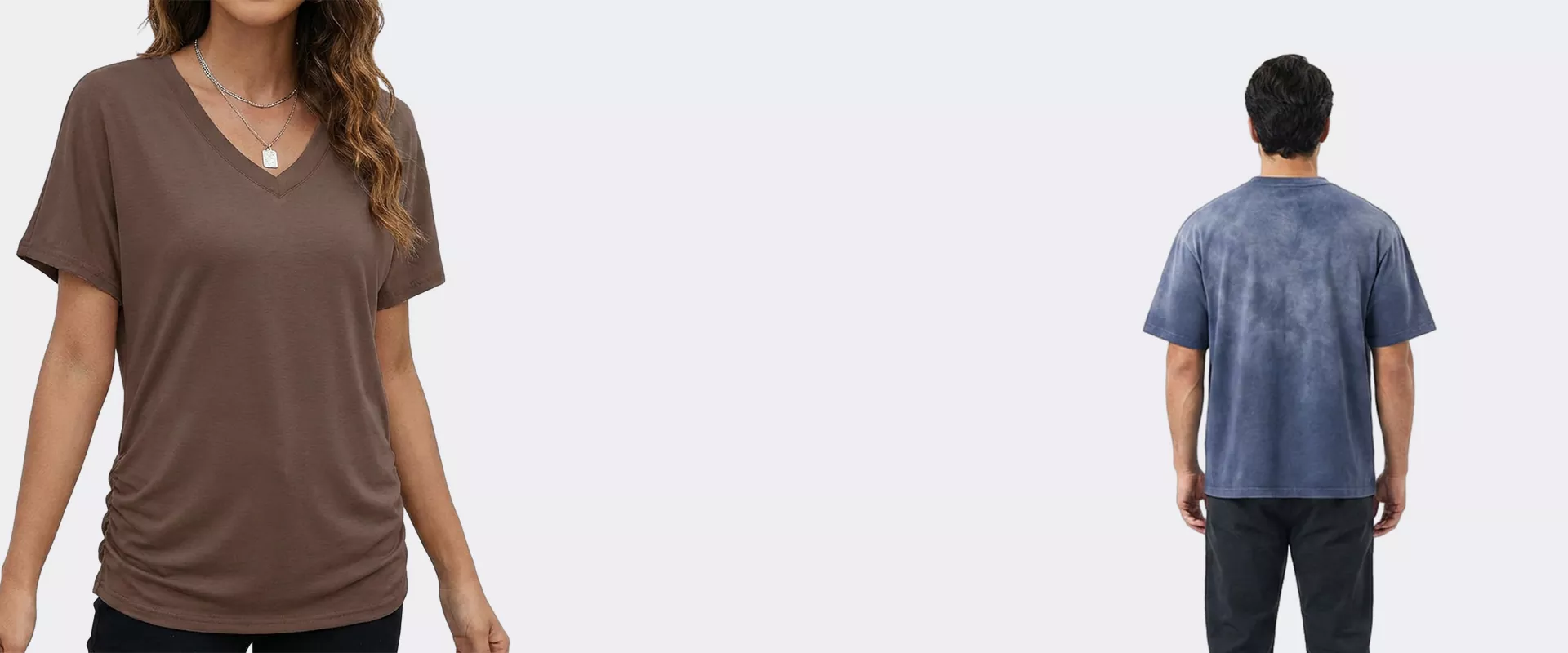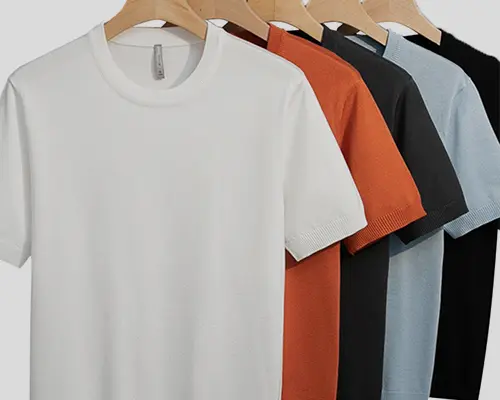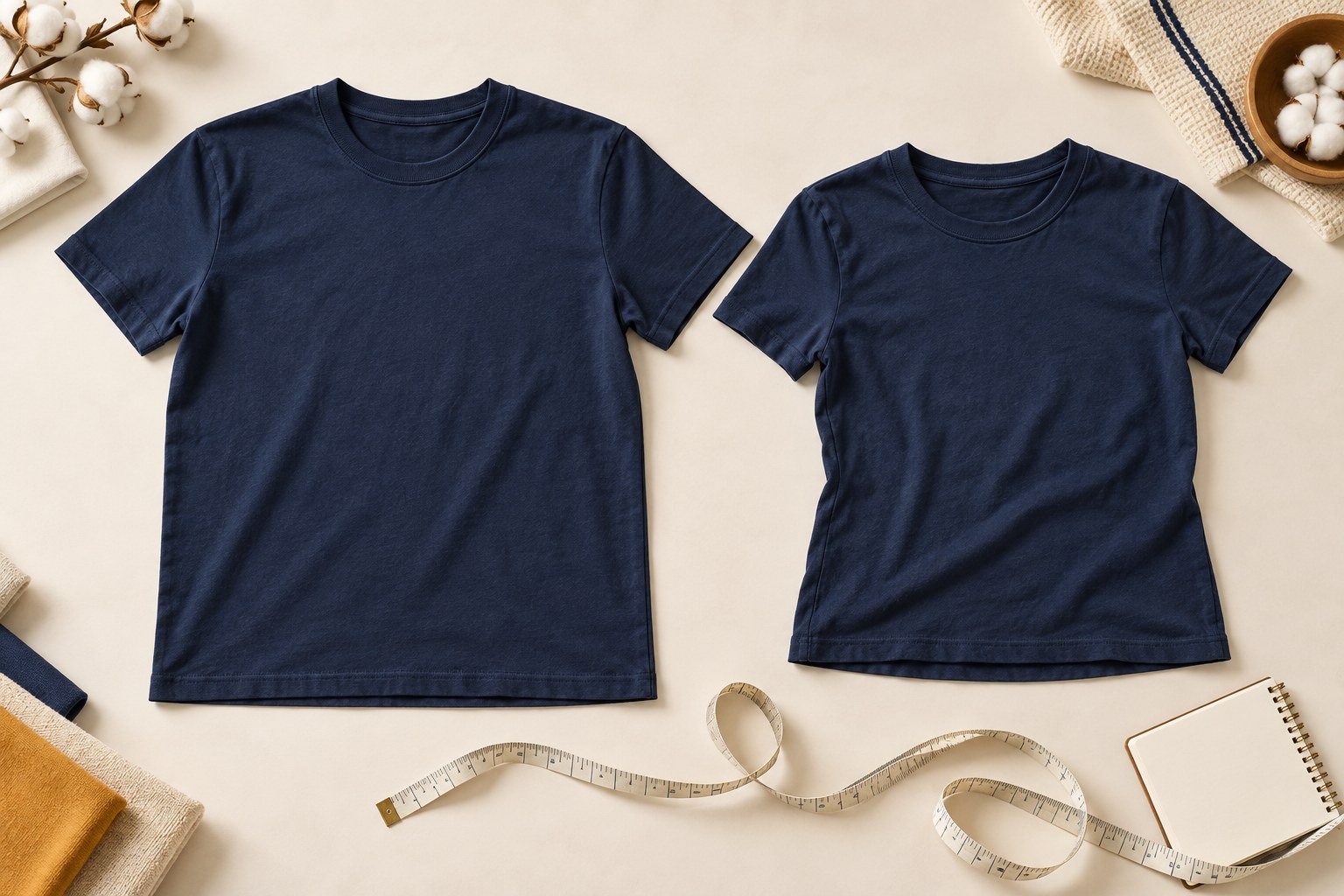

A shorter body, a tighter chest and a side seam that moves toward the front are different problems. Reading them separately makes a wash test much more useful.
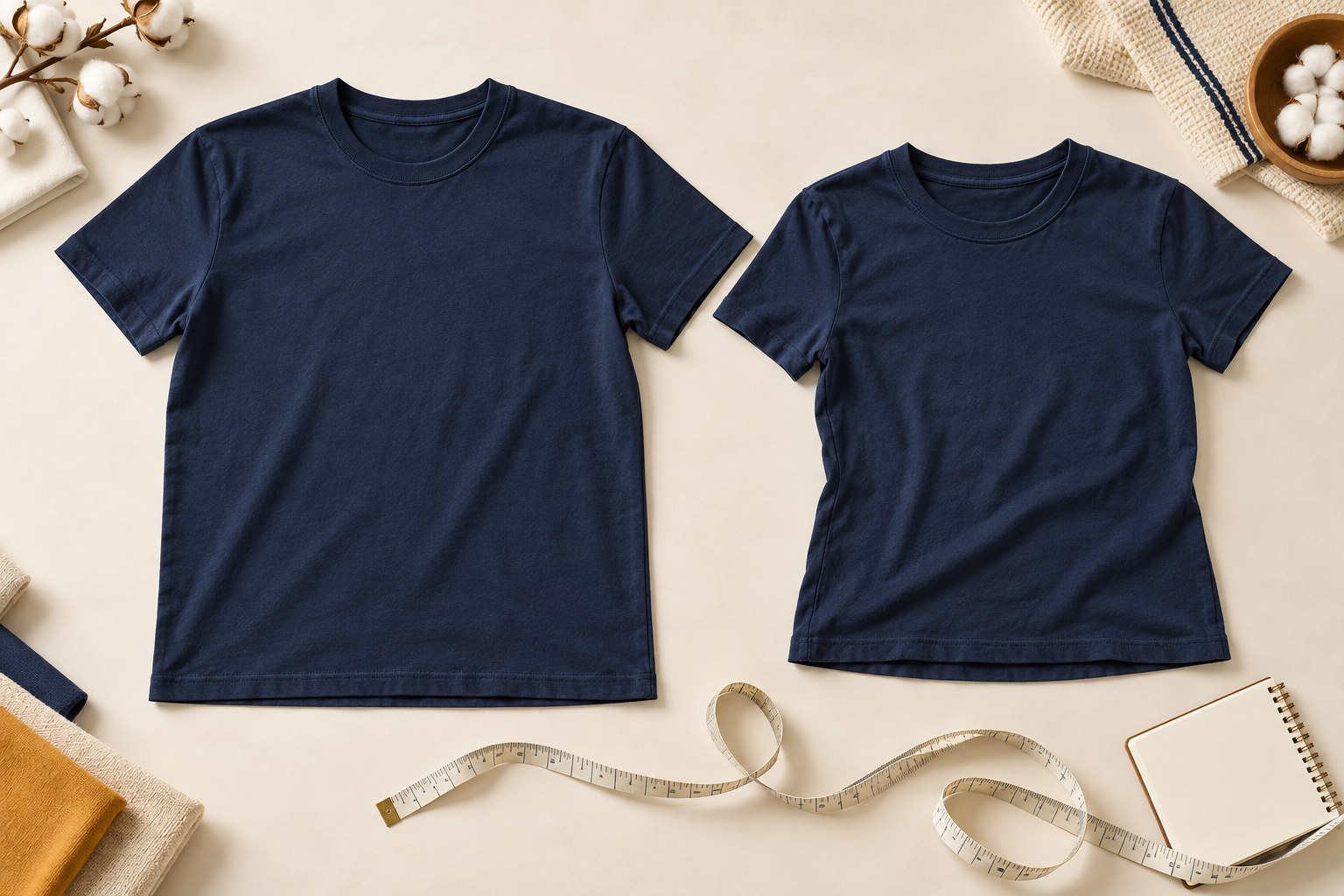 AI-generated concept illustration. The shirts show a hypothetical size comparison, not an actual wash-test result.
A T-shirt can look right out of the bag and fit differently after laundering. When that happens, "it shrank" is a useful starting description, but a poor final diagnosis. Did the body get shorter? Did the chest become narrower? Or did the panels rotate while the measured size changed very little?
Our recommendation is to judge the shape and fit left after washing, then use the percentages to explain what changed. A small percentage can still matter on a cropped style with little spare length. A shirt with reasonable length and width results can still have an unacceptable twisted seam.
The short answer
T-shirt dimensions can change when the knit structure relaxes and responds to washing and drying. Fabric construction and processing affect that response. Side-seam twist is a separate shape change, so record it separately. To judge a sample, compare the same length and width points before and after a defined wash-and-dry routine, then check the washed garment's fit and seam position.
Three changes to keep separate
Start with dimensions, then inspect alignment. Recording everything as a single "shrinkage" number hides the distinction between a smaller garment and a distorted one.
| Observation | What it means | What to record |
|---|---|---|
| The body or chest measures smaller | Shrinkage in that measured direction | Length and width results separately |
| A measurement becomes larger | Growth in that direction | The positive change, rather than treating it as zero shrinkage |
| The side seam moves around the body | Seam twist; garment panels have rotated relative to one another | Seam position before and after laundering, with the method used |
AATCC's textile terminology distinguishes dimensional shrinkage from seam twist. This distinction also explains why a length result alone cannot establish that a shirt kept its shape.
For a quick visual comparison, photograph the front and back laid flat before washing. Repeat the views afterward. Let the shirt lie naturally; forcing the side seams back into position would hide the change you are trying to observe.
Why a cotton T-shirt changes size
Knitted fabric consists of yarn loops. Its dimensions depend on the loop structure and on the forces applied during processing. Washing and drying can let the fabric settle into a different configuration, so the new dimensions need not match those measured before laundering.
CottonWorks' shrinkage guidance identifies yarn, knit construction, wet processing, finishing and garment care as contributors. It also explains that processing tensions can stretch fabric and that relaxation drying or compaction can reduce residual shrinkage.
That is why the fiber label cannot predict a finished shirt's exact response. It describes composition, while the sample represents a particular fabric and production route. The same caution applies to weight: the T-shirt GSM guide explains weight as one part of the fabric specification. Ask for wash results rather than using GSM as a substitute.
When a result looks poor, check the test conditions before changing the fabric. A shirt tested with a different drying procedure has not answered exactly the same question as the original sample.
"Pre-shrunk" is a question to investigate
A description such as "pre-shrunk" does not tell you the original dimensions, the wash conditions or the remaining change. Treat it as a reason to ask for a result on the actual fabric or garment.
Useful questions are specific: was the material compacted, was the finished garment washed, and which sample does the report cover? Then ask for the length and width results under the care routine intended for the shirt.
For sample approval, we would give more weight to a traceable finished-garment result than to a reassuring adjective. The finished sample includes the body fabric, neckline and construction together. A fabric swatch still has value, especially when investigating the material, but it answers a narrower question.
How to check a sample without hiding the change
You can run a development check to understand a sample before commissioning a laboratory test. Keep that check repeatable, and describe the routine you actually used. Claiming compliance with a named standard requires following that standard.
- Identify the sample by style, size, color and fabric lot where available. Keep the original record attached to that garment.
- Measure consistent points on the dry shirt. Define body length and the exact level of the flat chest measurement. Record photos showing the tape placement.
- Record the washing program, temperature, detergent, drying procedure and number of cycles. Use the intended care instructions as the starting point for a development check.
- Measure the dry garment again in the same way, without stretching it back to the first dimensions. For a laboratory report, use the method's conditioning and measurement requirements.
- Inspect the neckline, hem, seams and artwork separately. Keep washed and unwashed samples available so the team can compare the whole garment.
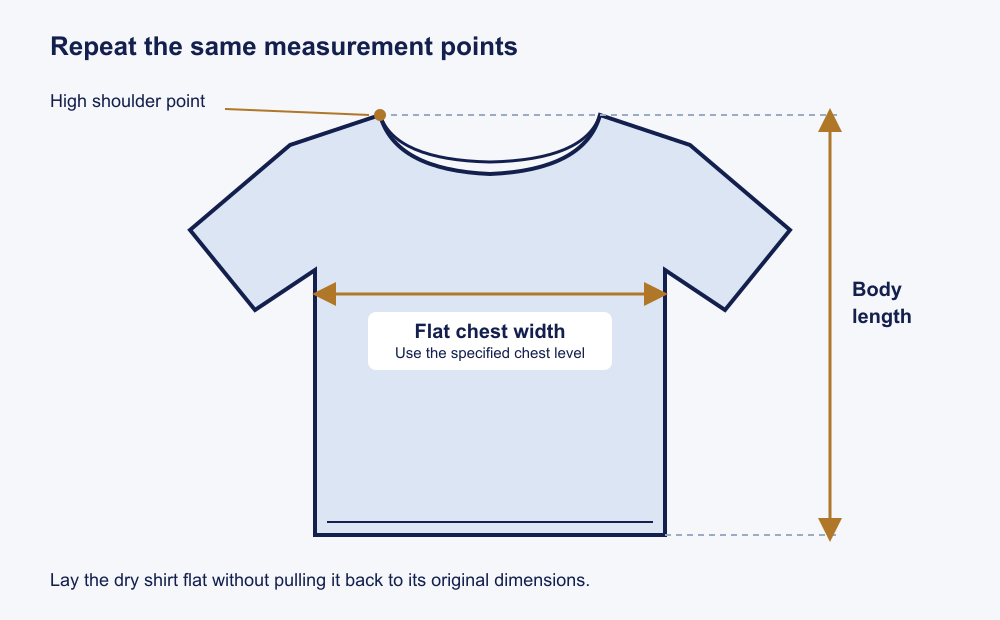 Example measurement points. Use the same points before and after washing; the chest level belongs in the measurement specification.
A straightened shirt may photograph neatly while concealing a rotated seam. Likewise, pulling the tape tight across a stretch knit can make the dimensions appear larger. Repeat the measurement if the difference may come from how the shirt was laid out.
Read the percentage alongside the centimeters
Calculate each direction independently. Using signed dimensional change keeps shrinkage and growth visible:
A negative value means the measurement decreased. A positive value means it increased. Some reports express shrinkage as a positive loss percentage instead, so check the sign convention before comparing them.
A sample can pass one fit requirement and miss another
Consider an illustrative T-shirt measuring 72.0 cm in body length and 56.0 cm across the flat chest. After the chosen wash-and-dry routine, it measures 68.4 cm long and 54.88 cm wide.
| Measurement | Before | After | Change |
|---|---|---|---|
| Body length | 72.0 cm | 68.4 cm | −3.6 cm / −5.0% |
| Flat chest width | 56.0 cm | 54.88 cm | −1.12 cm / −2.0% |
If the design requires at least 70 cm of washed body length, this sample misses that requirement. A second shirt starting at 75 cm and losing the same 5% ends at 71.25 cm, which meets that length requirement. The percentage is identical; the remaining length is different. Neither result tells you whether the neckline or seam twist is acceptable.
The chest result also needs the correct unit. A flat width is a half-chest measurement. In this simplified comparison, a 1.12 cm reduction across the flat chest corresponds to 2.24 cm around the garment. Compare that change with the intended fit allowance rather than reading it as a 1.12 cm change in circumference.
Calculate your sample's dimensional change
Use centimeters or inches consistently. The starting values below are the illustrative example above.
The calculator measures change. Compare the washed dimensions with your fit requirements; it does not assign a pass or fail.
For approval, write down both the allowed dimensional change and the required washed dimensions where fit depends on them. Keep seam alignment as its own criterion. A universal percentage copied from another product may not serve your design.
Which laboratory test answers which question?
A report should identify what was tested. AATCC TM135 addresses fabric dimensions after home laundering; TM150 addresses garment length and width changes. The garment method includes washing and drying options, so its name alone does not identify the full test conditions.
| Your question | Method to discuss with the lab | Scope distinction |
|---|---|---|
| Does the fabric change length or width? | TM135 | Fabric dimensional change |
| Does the finished shirt change length or width? | TM150 | Garment dimensional change |
| Does fabric skew change after washing? | TM179 | Fabric skew change |
| Does the garment seam twist? | TM207 | Seam twist before and after home laundering |
These are separate entries in the AATCC standards directory. Choose the method with the laboratory for the actual material and question, and agree the acceptance criteria separately.
When reviewing a result, ask for the sample identity, method and edition, selected wash and dry conditions, cycle count, individual length and width results, and relevant photographs. Two reports with different conditions should remain separate until the difference has been understood.
A poor result needs a targeted next step
The washed shirt tells you what happened. It does not, by itself, prove which production step caused it. Use the pattern of changes to decide what to investigate.
| Observed pattern | Useful next check | Judgment to avoid |
|---|---|---|
| Body length changes much more than width | Review directional fabric results and processing with the mill; confirm the measurement points. | Assuming every dimension needs the same pattern correction. |
| Dimensions meet the limits but seams rotate | Evaluate garment seam twist and investigate fabric alignment and construction. | Approving shape from the shrinkage figures alone. |
| The neckline changes while the body stays acceptable | Compare the rib and body fabric in the finished neckline; review its construction. | Increasing the whole shirt to address a local problem. |
| Repeated measurements disagree | Repeat the same layout and measurement procedure; check sample identity and test conditions. | Changing the pattern before confirming the data. |
Pattern compensation can be worth investigating when change is repeatable, but it also changes the unwashed fit. Approve both states. If you simply add the loss to the original length, you can also underestimate the correction: an illustrative 70 cm washed target at a consistent 5% loss requires 70 ÷ 0.95, or about 73.68 cm before washing. That calculation assumes the behavior stays the same; a revised sample must confirm it.
If results vary among garments, we would investigate that variation before compensating the pattern. Enlarging a pattern cannot make inconsistent behavior consistent.
Keep the wash record beside the measurement specification and approved sample. The T-shirt quality control checklist covers the wider inspection record, while the custom T-shirt manufacturing guide explains how those references fit into production approval.
Follow-up questions
Can I combine the length and width results into one average?
Keep them separate for fit approval. In the example above, averaging the magnitudes of 5% and 2% gives 3.5%, which describes neither the length loss nor the chest change. If a report includes an average, retain the directional results as well.
Does a fabric test replace a finished T-shirt test?
A fabric result helps evaluate the material. A finished-garment result answers a different question because it covers the assembled shirt. Use the garment when approving washed fit and use the fabric result to help investigate material behavior.
Will washing the garment before sale remove the need to test it?
Test the garment in the state the customer will receive it. A production wash does not establish how that finished product will respond to later care. Keep the production treatment separate from the customer-care test in the record.
For your next sample review, ask for one clearly identified washed shirt and a record of its original dimensions, care routine and final measurements. Look at the neckline and side seams before reading the overall verdict. That gives you a concrete basis for discussing fit, fabric and construction.
To see where those decisions enter the factory workflow, continue with how T-shirts are made.