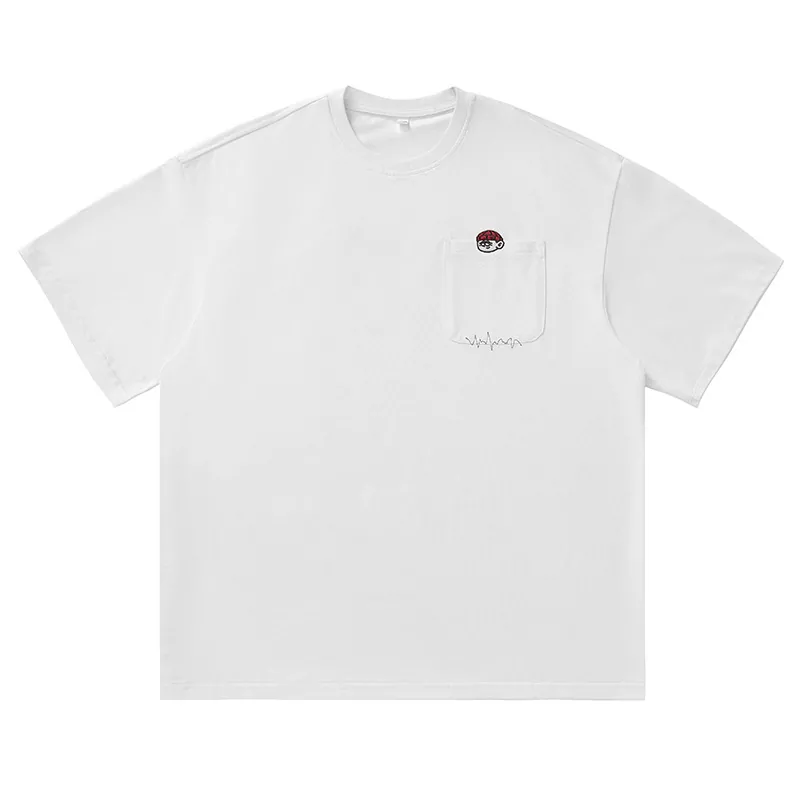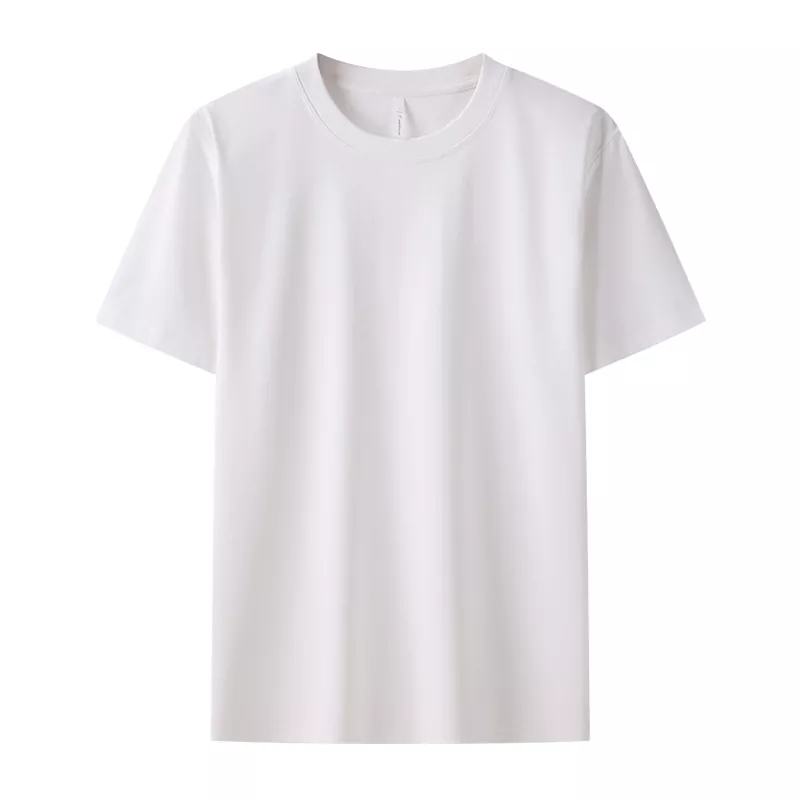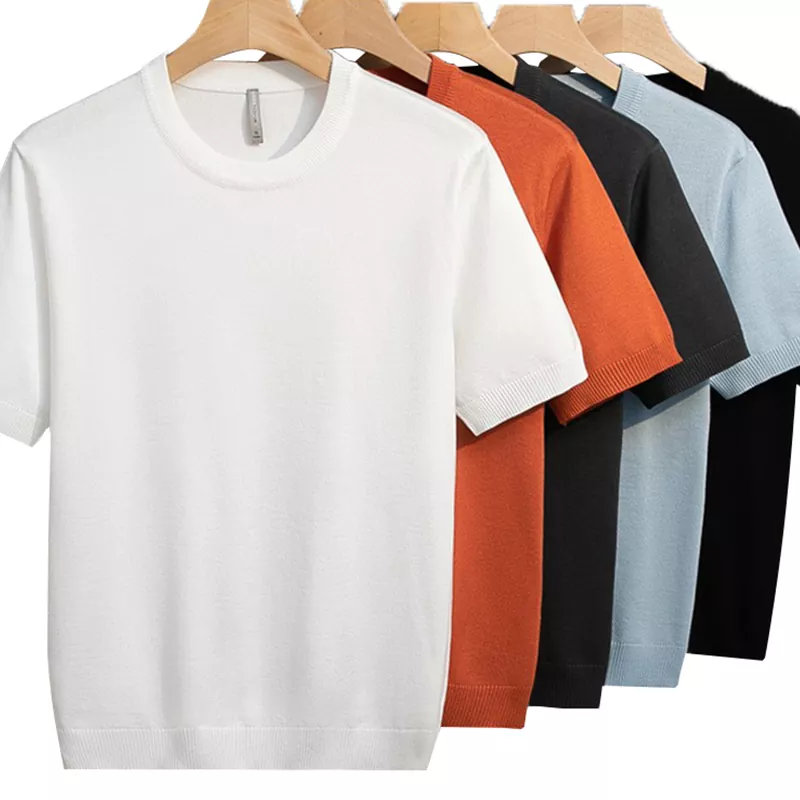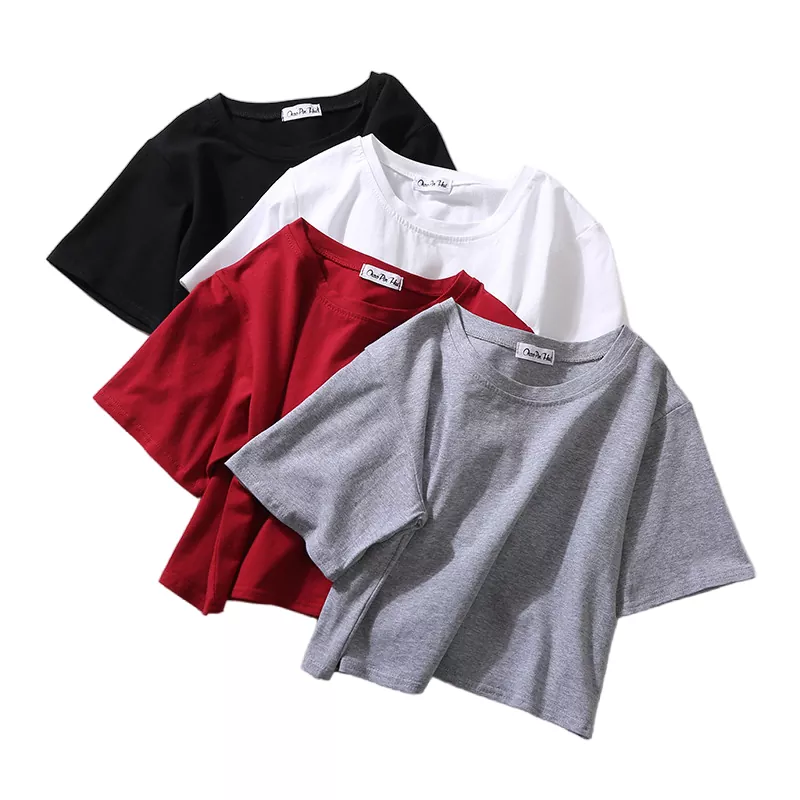

GSM tells you how much one square metre of fabric weighs. It is a useful starting point for T-shirt development, but it does not tell you the full story about thickness, softness, opacity or quality.
A GSM number helps a buyer compare fabric weight before sampling. It should narrow the choice, not replace the sample. Two fabrics can share the same GSM and still feel different because their fibers, yarns, knit structures and finishes are different.
The right weight depends on the intended fit, climate, retail price, decoration and customer expectation. This guide gives practical starting ranges and shows what to approve before a factory buys fabric for bulk production.
Quick recommendation
For an everyday retail T-shirt, 160 to 200 GSM is a sensible place to begin. Consider less than 160 GSM when low weight and a lighter hand matter. Consider 200 GSM and above when the design needs more body or a heavyweight look. These are development ranges, not fixed standards. Approve the actual knit, color and finish before placing a bulk order.
1. What does GSM mean in T-shirt fabric?
GSM means grams per square metre. A fabric rated at 180 GSM has a nominal mass of 180 grams for one square metre of that fabric. The number describes mass per unit area, not the weight of a finished T-shirt.
GSM = sample mass in grams / sample area in square metres A 10 cm by 10 cm sample has an area of 0.01 square metres. If it weighs 1.8 grams, the calculated result is 180 GSM.
Mass per unit area is a defined textile measurement concept. ISO 3801:1977, which remains current after confirmation in 2023, covers determination of mass per unit length and area for woven fabrics. T-shirts normally use knitted fabric, so the buyer and supplier should still state the test method that applies to the actual material and purchase specification.
2. A practical T-shirt GSM range chart
The bands below are useful for early product briefs. They are not universal classifications. Fiber, knit density and finishing can shift how a fabric behaves within any range.
| GSM range | Possible product direction | What to check in the sample |
|---|---|---|
| Below 140 | Very light fashion tops, layering pieces and selected promotional programs | Opacity, seam distortion, neckline stability and print show-through |
| 140 to 160 | Light casual tees and warm-weather collections | Drape, shrinkage, twisting and the balance between softness and stability |
| 160 to 200 | Everyday retail basics, uniforms and general casual ranges | Hand feel, recovery, print result and after-wash measurements |
| 200 to 240 | Substantial premium basics, oversized silhouettes and boxy fits | Heat, drape, collar balance and whether the garment feels too rigid |
| Above 240 | Heavyweight streetwear and structured statement products | Comfort, seam bulk, drying time, production handling and shipping weight |
3. Why two fabrics with the same GSM can feel different
GSM measures weight per area. It does not identify what the fabric is made from or how that material has been built. Compare the complete construction before deciding that two 180 GSM options are equivalent.
Fiber content
Cotton, polyester, viscose and blended fibers have different densities, surfaces and moisture behavior. A cotton jersey and a polyester performance knit at the same GSM can have different thickness, drape and drying characteristics.
Yarn and knit construction
Yarn count, twist and knit density change the surface and the amount of open space in a fabric. Single jersey, interlock, rib and pique do not behave the same way at an equal weight.
Finishing
Brushing, compacting, enzyme washing, garment washing, coating and other finishes can change hand feel and measured mass. A soft finish may make one fabric feel fuller even when the stated GSM is unchanged.
4. Choose GSM by product, not by a quality label
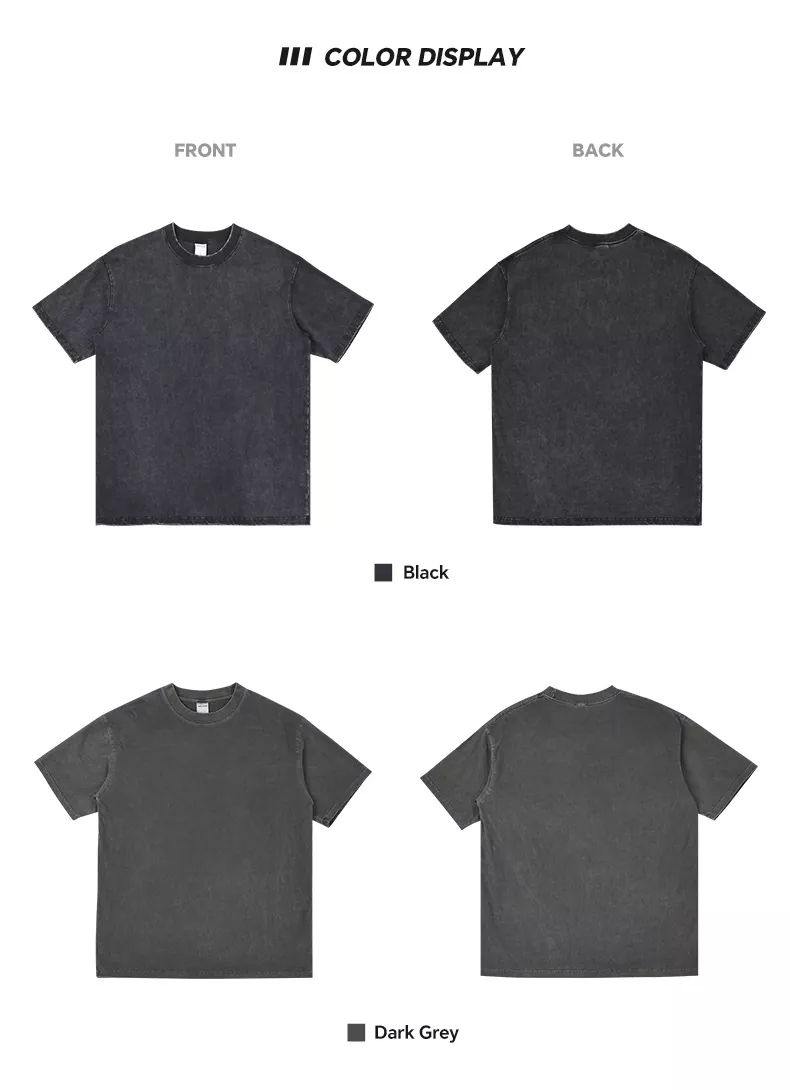
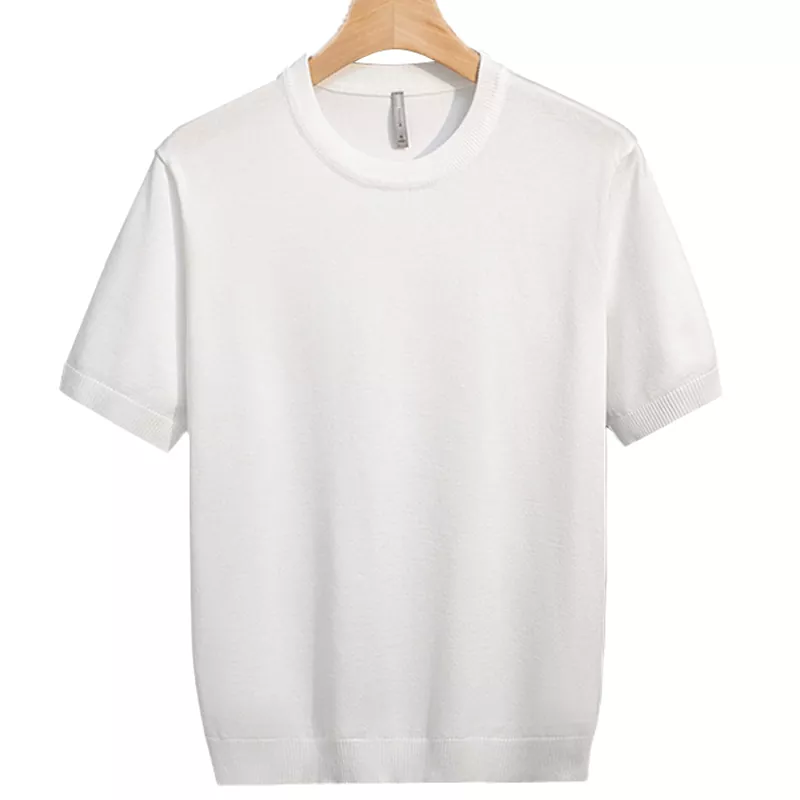
Higher GSM is not automatically better. A heavy T-shirt can be wrong for a humid climate or a fluid women's style. A light fabric can be the correct choice for layering, provided the opacity, seams and recovery meet the brief.
| Product brief | Starting range | Buyer priority |
|---|---|---|
| Light promotional tee | 140 to 160 GSM | Cost, print coverage, opacity and neckline stability |
| Everyday retail basic | 160 to 200 GSM | Balanced hand feel, repeatability and after-wash performance |
| Premium cotton basic | 180 to 220 GSM | Yarn quality, smoothness, collar shape, low pilling and finish |
| Oversized or boxy streetwear | 200 to 280 GSM | Structure, drape, drop shoulder shape and seam bulk |
| Performance T-shirt | 120 to 180 GSM | Fiber, knit, moisture management, stretch and drying behavior |
| Fitted or draped fashion top | 130 to 180 GSM | Opacity, stretch, recovery, softness and body coverage |
Use these ranges to request swatches. The GOODTEX T-shirt fabric guide can help you compare cotton, polyester, blends and knit structures after you select a weight direction.
5. What GSM changes, and what it does not
| Property | How GSM may affect it | Why GSM is not enough |
|---|---|---|
| Opacity | More mass can reduce show-through | Color, fiber, knit density and stretch also matter |
| Drape | Higher weight can add body | Fiber and knit can make a heavy fabric fluid or a light fabric firm |
| Durability | More material may support wear resistance | Yarn strength, pilling, seams and finishing remain important |
| Warmth | Higher weight often feels warmer | Air spaces, fiber and moisture transport change thermal comfort |
| Breathability | Very dense heavy fabric may pass less air | Knit openness and fiber moisture behavior can outweigh the number |
| Price | Higher GSM usually increases fabric consumption by weight | Fiber cost, dyeing, finish, wastage and quantity also affect the quote |
6. Match fabric weight to printing and decoration
Decoration adds its own stiffness, heat and weight. A large solid print can dominate a light T-shirt. Dense embroidery can pull or pucker a fabric that lacks enough stability. A heavy shirt may support substantial artwork, but the final hand can become too rigid if both fabric and decoration are dense.
- Approve artwork at its real production size and placement.
- Test the chosen ink, transfer or embroidery on the final fabric color.
- Check show-through and dye migration on light or synthetic materials.
- Measure the garment after decoration and after the agreed wash test.
- Compare hand feel, stretch and recovery in the decorated area.
The product brief should name the decoration method instead of assuming that the same artwork will behave equally on every GSM.
7. How to measure and approve GSM
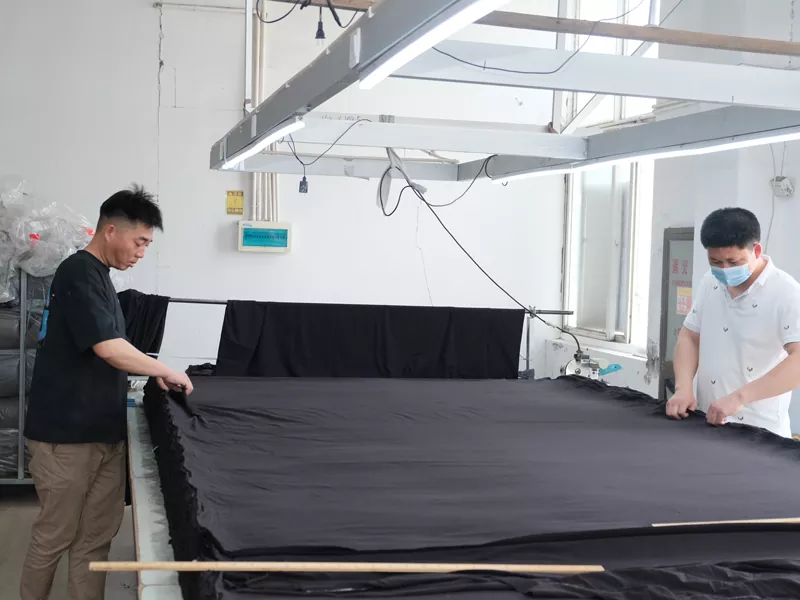
A small sample can be cut to a known area, conditioned as required, weighed on a suitable balance and converted to grams per square metre. A factory may use a circular GSM cutter and scale, while a laboratory may follow a specified standard or customer method.
- State whether the GSM applies to greige fabric, dyed fabric, finished fabric or the fabric after washing.
- Take samples from several positions rather than relying on one cut.
- Avoid using edge material or visibly abnormal areas unless the method requires them.
- Record each result and the average, along with the test conditions.
- Compare bulk fabric with the approved sample and purchase specification.
8. Set a GSM tolerance before production
A purchase specification should state a nominal GSM, an agreed tolerance, the applicable test method and the production stage at which the fabric will be assessed. There is no single tolerance that fits every product and mill process.
A narrow tolerance can reduce acceptable production variation, but it may also increase sourcing difficulty or cost. A wide tolerance can produce noticeable differences in drape, opacity or garment weight. The buyer and manufacturer should choose a range that protects the product without pretending textile production has no variation.
9. Common GSM mistakes in T-shirt sourcing
| Mistake | What goes wrong | Better instruction |
|---|---|---|
| Calling a high GSM premium | Weight is treated as proof of fiber, yarn or sewing quality | Approve material construction and workmanship separately |
| Copying a competitor's GSM | The fit, knit and finish may be different | Use a reference garment plus a complete specification |
| Ignoring fabric color | Opacity and visual weight can change between light and dark shades | Approve every important color in the chosen construction |
| Testing only before washing | Weight, measurements and hand may change after care | Set an agreed wash method and compare results |
| Quoting without tolerance | Buyer and supplier use different definitions of acceptable bulk | State target, tolerance and method in the purchase file |
10. T-shirt GSM RFQ checklist
Include the following points when you ask a manufacturer to source or develop a T-shirt fabric:
- Target customer and intended use
- Garment fit and reference style
- Fiber composition and blend ratio
- Knit structure
- Nominal GSM and allowed tolerance
- Finished or after-wash condition
- Color or lab dip reference
- Required finish or garment wash
- Printing or embroidery method
- Opacity and stretch expectations
- Required tests and sampling plan
- Quantity by style and color
If you are unsure about the exact GSM, send the product use, target hand feel and a reference garment. Ask for two or three swatches around the intended range, then compare them after the same finishing and wash process.
Frequently asked questions
What GSM is best for a good-quality T-shirt?
There is no single best GSM. Many everyday retail programs begin between 160 and 200 GSM, but quality also depends on fiber, yarn, knit, finishing and construction. Choose the weight for the intended product and approve the actual sample.
Is 180 GSM good for a T-shirt?
180 GSM is a practical starting point for many everyday T-shirts. It can provide a useful balance between weight and year-round wear, but the result still depends on composition, knit density, finish, fit and color.
Is a higher GSM T-shirt always better?
No. Higher GSM adds mass and can add structure, but it can also increase warmth, drying time, seam bulk and shipping weight. A lighter fabric may suit performance wear, layering or hot climates better.
Does GSM tell me how thick the fabric is?
Not exactly. GSM measures mass per area, while thickness is a separate property. Fiber density, yarn and knit construction can make two fabrics with the same GSM feel different in thickness.
Does fabric GSM change after washing?
It can. Shrinkage, relaxation and finishing changes may alter the fabric area and measured mass per area. State whether the requirement applies before or after the agreed wash method.
Should I include GSM in my T-shirt tech pack?
Yes. Include the nominal GSM, allowed tolerance, fiber composition, knit, finish, color and test condition. Keep the approved swatch or pre-production sample as a physical reference.
Need help choosing a T-shirt fabric weight?
Send GOODTEX your target customer, fit, composition, decoration and order quantity. The team can review the brief and prepare fabric options for sampling.
Editorial owner: NINGBO GOODTEX IMP & EXP CO., LTD. GSM ranges in this guide are product development starting points, not universal textile standards. Confirm the specification, test method and tolerance for each order. Add the real publication date and named technical reviewer before publishing.