
A T-shirt can be both combed and ring-spun. The two terms describe different stages of making its yarn, so treating them as rival fabric grades starts the comparison in the wrong place.
For a clothing brand, the useful question is what each term adds to the specification. Does it identify the fiber preparation, the spinning system or the finished fabric? Once those fields are separate, you can ask a supplier a precise question and compare samples without giving a single label more credit than it deserves.
Our starting position is simple: use the yarn description to narrow the options, then approve the finished shirt against the result you need. A better-described yarn is useful evidence. It is not a complete garment specification.
The distinction in one sentence
Combed describes extra fiber preparation that removes short fibers; ring-spun describes how prepared fibers become yarn. Carded ring-spun and combed ring-spun are both valid descriptions. Neither term, by itself, specifies fabric weight, wash performance or the finished T-shirt's fit.
Put each term in the right column
"100% cotton," "combed" and "ring-spun" can all appear in the same description because they answer different questions. Start by separating those questions rather than arranging the words into a quality ladder.
| Term | What it describes | What it leaves open |
|---|---|---|
| 100% cotton | Fiber composition | Preparation, spinning system and fabric construction |
| Carded | Fiber preparation; in a carded/combed comparison, the route without the extra combing step | Which spinning system follows |
| Combed | An additional preparation step after carding | Spinning system and finished-garment performance |
| Ring-spun | Yarn formation on a ring-spinning system | Whether the prepared cotton was combed |
| Open-end / rotor-spun | A different yarn-spinning system | The full material specification and whether it suits your target shirt |
| GSM | Fabric mass per unit area | Yarn preparation and spinning route |
CottonWorks' fiber-preparation guide describes carding, combing and roving as distinct operations, and identifies both carded and combed material as inputs to the ring-spinning preparation route. Combed cotton therefore also passes through carding.
Fiber-preparation question
Was the cotton carded only, or carded and then combed?
This identifies preparation before yarn formation.
Spinning-system question
Was the prepared material ring-spun, rotor-spun or processed by another system?
This identifies how the yarn was formed.
If a quotation says only "ring-spun cotton," ask the preparation question. If it says only "combed cotton," ask the spinning-system question. Those are gaps in the description, not proof that the sample is poor.
What combing changes, and what it cannot promise
Combing removes short fibers from the material being prepared for spinning. CottonWorks explains that it can support finer yarns and improvements in hand and drape. Those are reasons to investigate a combed option when the target is a smoother, finer-looking fabric.
There is still variation within the word "combed." In its Textile Yarns technical guide, Cotton Incorporated distinguishes fully combed yarn from partially combed yarn made with a mixture of combed and carded slivers. It also cautions that the incoming fiber quality matters when comparing the material removed by combing.
For a buyer, the implication is practical: two suppliers writing "combed" may not have specified the same input or preparation. Ask them to identify the yarn quality they are quoting and link it to the supplied sample. Asking for the largest possible waste-removal percentage would miss the point; that figure needs the starting-fiber context.
We would not approve a finished shirt solely because "combed" appears on the fabric sheet. Keep the desired surface, wash behavior and garment construction in the approval record. The process description should support those decisions, rather than replace them.
Ring-spun describes a system, not a complete fabric
Ring spinning draws prepared roving down and inserts twist to form yarn. Rotor spinning, commonly called open-end spinning, uses a different route. CottonWorks' yarn-spinning guide explains that the systems produce different yarn structures and that ring spinning involves additional preparation and winding stages.
That gives a technical basis for asking why quotations differ. It does not establish a fixed price premium, a universal service life or a guaranteed printing result for every shirt made from either yarn.
Separate yarn fineness from fabric weight
A yarn specification may also include a count such as Ne 24/1 or Ne 30/1. In the English cotton count system, a higher number means a finer yarn. Ne 30/1 is therefore finer than Ne 24/1; it does not mean a 30 GSM fabric or a heavier shirt.
The yarn count and the finished fabric's GSM belong in different fields. If one quotation provides a yarn count and another provides only GSM, ask for the missing information before comparing the two. The T-shirt GSM guide explains how to use fabric weight in its own right.
Also check the count system. A number without its system and yarn construction is an incomplete comparison. "Higher count" is not a reliable buying instruction when the two suppliers may be using different notation.
What a polished T-shirt description still leaves open
"100% combed ring-spun cotton" combines composition, preparation and spinning. It is more informative than "cotton," but the fabric and garment decisions continue after the yarn is made.
You still need to define knit construction, finished weight, color and finish, as well as the shirt's measurements, neckline and seams. A claim about yarn formation does not state how much body length the finished shirt will retain after your chosen washing and drying routine.
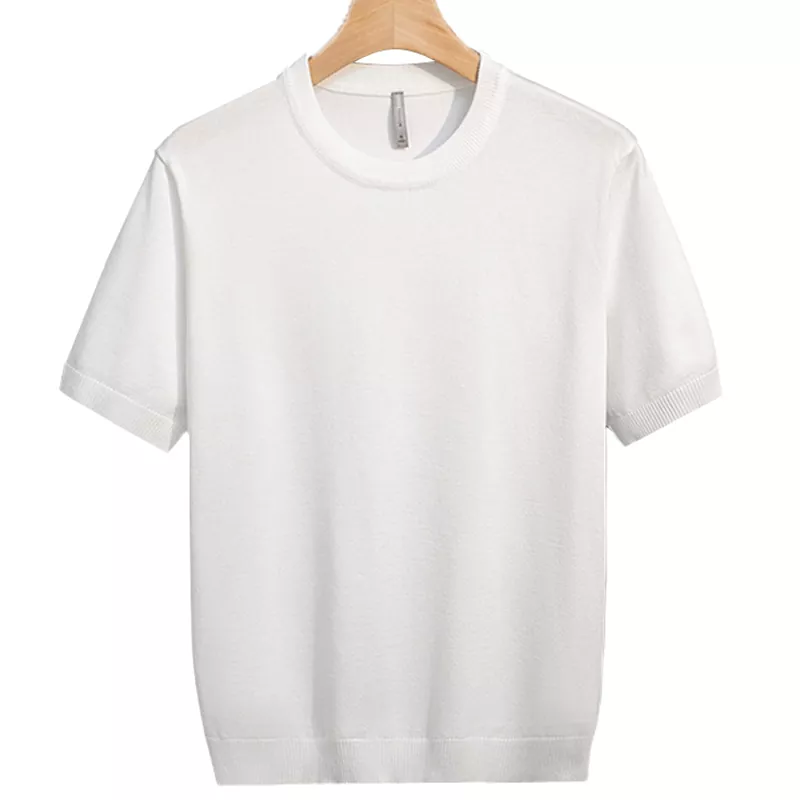
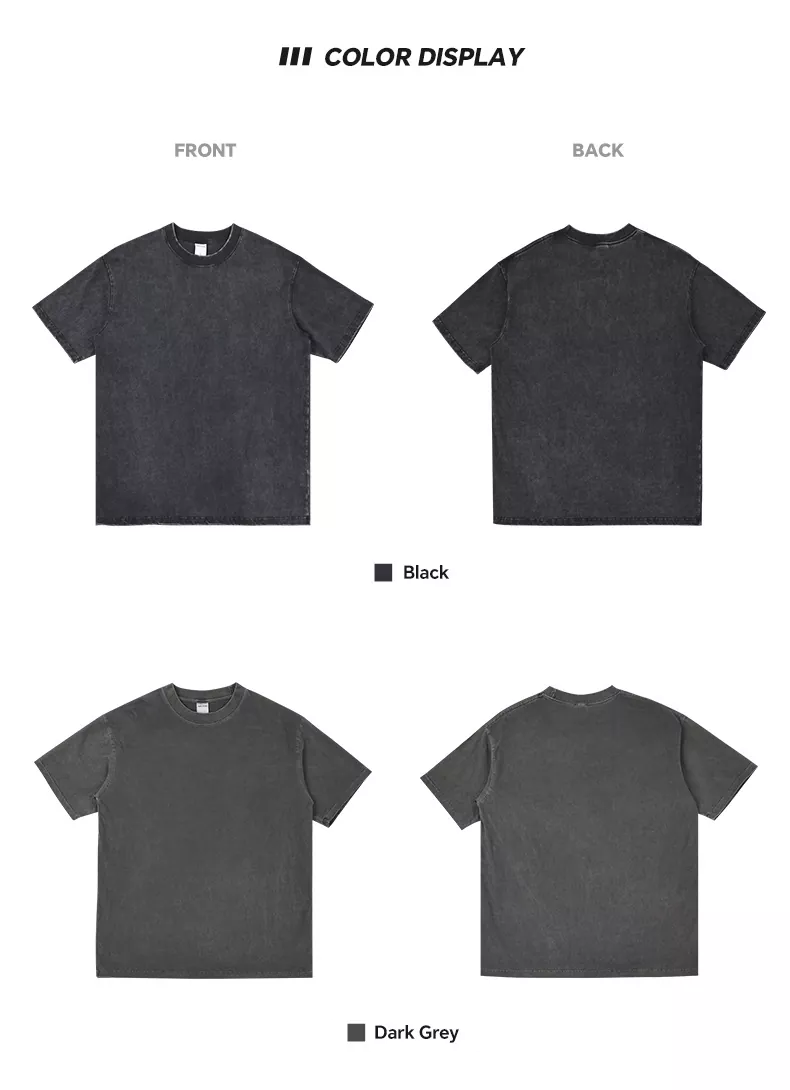
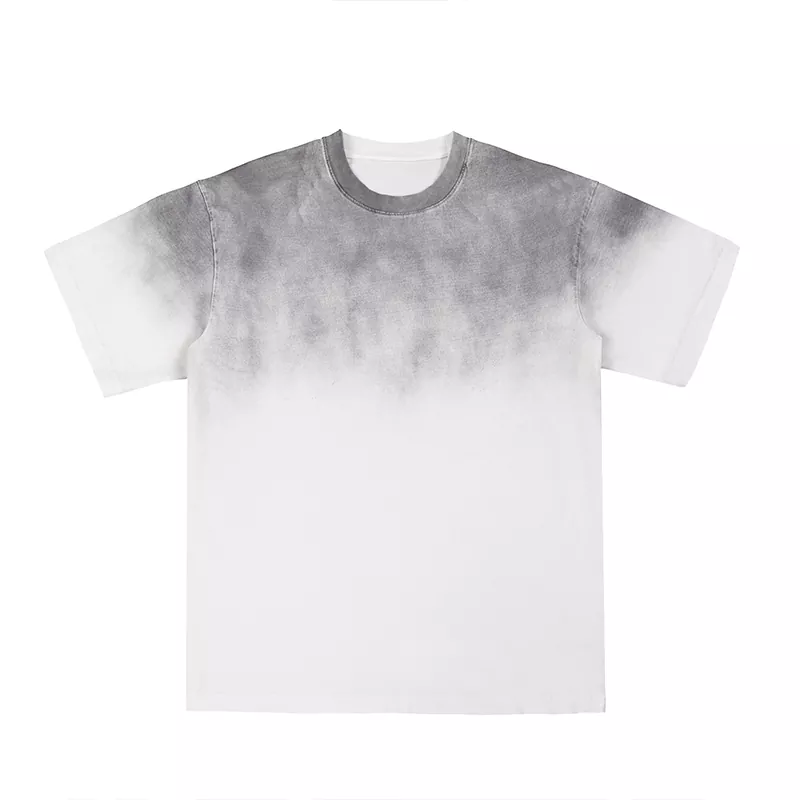
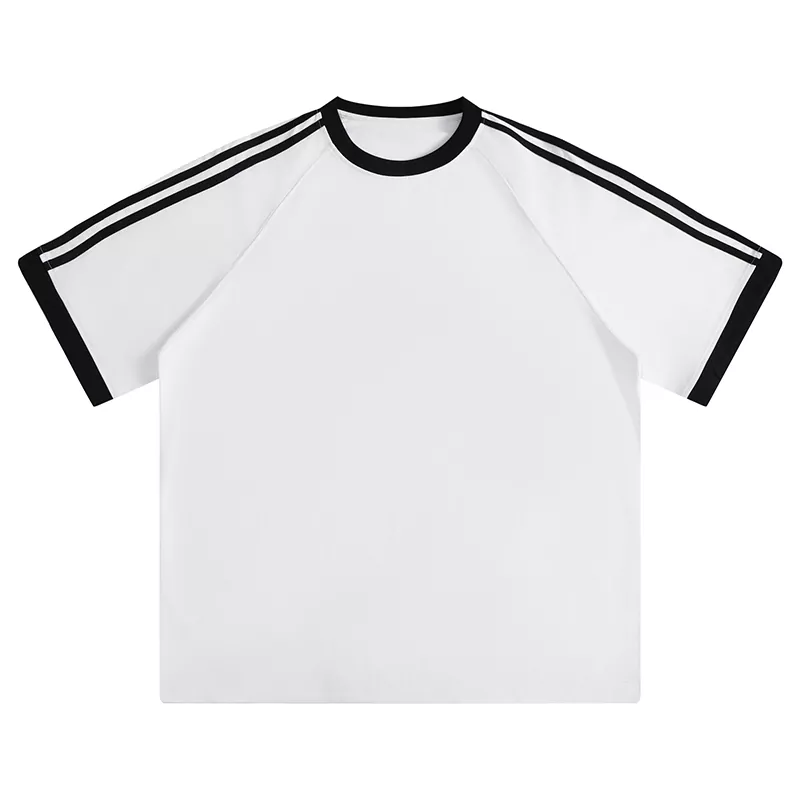
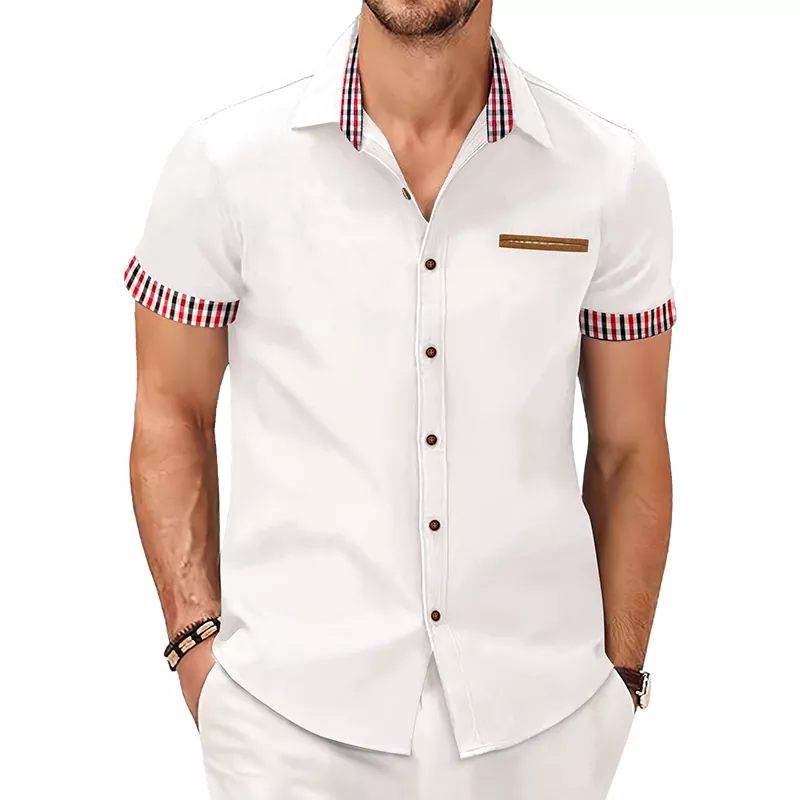
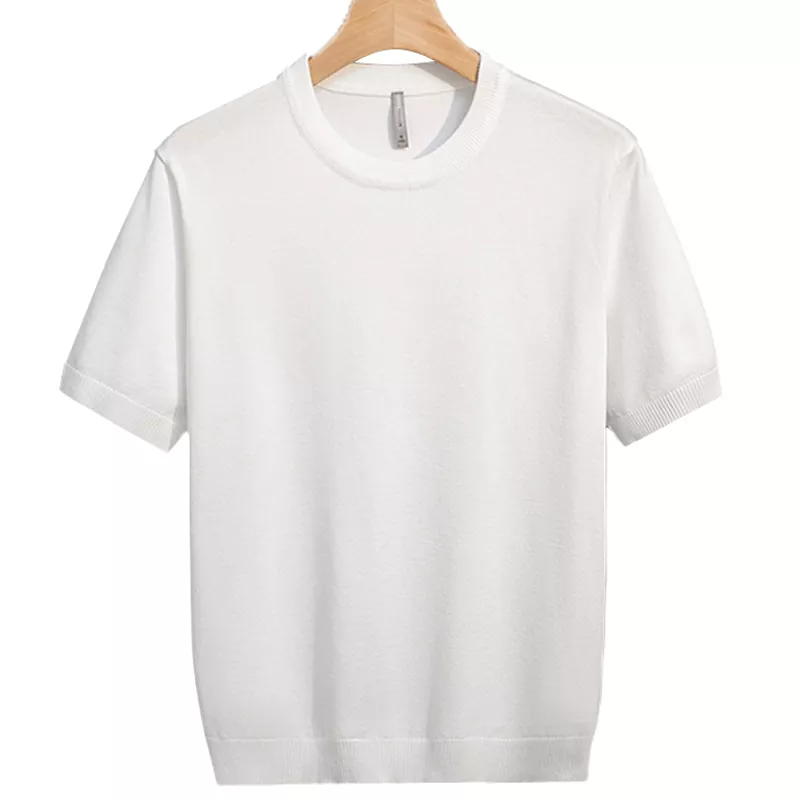
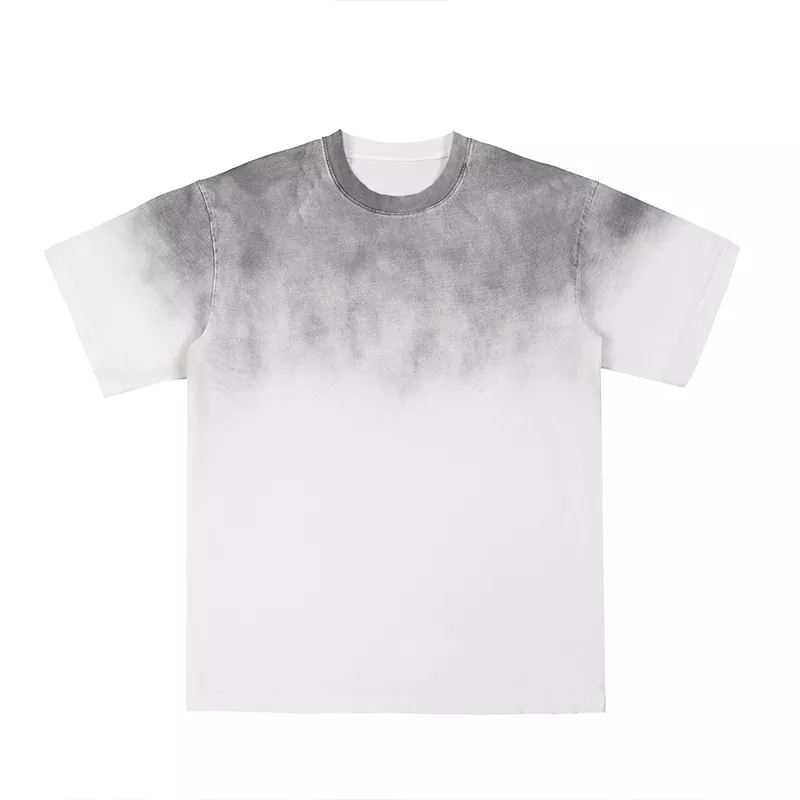
These product views help describe appearance; they do not identify the underlying spinning system. Ask for the material record attached to the sample rather than trying to infer the yarn from a photograph.
For the later production stages, how T-shirts are made follows the work from fabric preparation through sewing and packing.
Compare two samples without crediting the wrong variable
If the question is whether combing improves the result you want, keep the spinning route the same. If the question is ring versus rotor spinning, keep preparation and the other relevant specifications as comparable as the project allows.
An example of an unfair comparison
Imagine Sample A is a 180 GSM carded ring-spun jersey with a smooth finish. Sample B is a 240 GSM combed ring-spun jersey with a garment wash. These are hypothetical specifications, not GOODTEX test results.
If you prefer B, you have selected a finished fabric with several differences. You have not isolated the effect of combing. You also have not compared ring spinning with another spinning system, because both samples are ring-spun.
For a product selection, that may be enough: choose the complete fabric that suits the design. For a technical conclusion about why it feels different, you need a more controlled comparison.
| Question | Keep comparable | Review separately |
|---|---|---|
| Does combing add value to this design? | Spinning system, composition, yarn count, knit, finished weight, finish and color | Surface, hand and the agreed performance checks |
| Which spinning route suits the shirt? | Preparation and the fabric specifications relevant to the design, where feasible | Finished appearance, performance and complete quotations |
| Which finished sample should we approve? | The target garment and the care or test conditions used for evaluation | Each sample's full specification, even where the fabrics differ |
A fair comparison does not require pretending that every variable can be held identical. Record what changed. If the mill changes the yarn count or finishing route to meet the target, evaluate that revised combination instead of calling it evidence about one process alone.
We would inspect the unwashed surface, keep a washed sample for comparison, and judge the shirt in the form the customer will wear. If decoration is central to the design, include the actual artwork application in the sample approval. A generic "good for printing" description leaves the important result unseen.
Turn the label into a useful specification
A concise material record should let another person identify what was approved. Keep the following fields separate:
- Fiber composition, with the blend ratio where applicable.
- Carded or combed preparation, with any further qualification agreed with the supplier.
- Spinning system, yarn count system and count, and single or plied construction.
- Knit construction, finished GSM, color reference and finishing or washing route.
- The swatch or garment sample identifier, plus the agreed wash, appearance and measurement criteria.
For example, "cotton, combed, ring-spun, single jersey" records four useful facts. It still needs the count, finished weight, finish and approved reference to identify the fabric you intend to repeat. Do not fill those fields with a generic industry value; use the actual material selected.
When reviewing a proposed substitution, ask which fields change. "Equivalent combed cotton" is too broad if the yarn, knit or finish also changes. Request a replacement sample and review the affected criteria before treating the two specifications as interchangeable.
The T-shirt quality control checklist covers the wider inspection record. The custom T-shirt manufacturing guide puts the material decision alongside fit, decoration and production approval.
Paying for combing can be a sensible choice when its contribution serves the target fabric. We would investigate it with particular interest for a design whose acceptance depends on a fine, clean surface. If a carded sample meets the agreed appearance and performance requirements, its shorter description is not a reason to reject it. Spend against a defined requirement and a verified sample, not against the number of premium-sounding words.
Questions buyers still ask
Can ring-spun cotton also be carded?
Yes. Carded ring-spun and combed ring-spun describe different preparation routes feeding ring spinning. The words ring-spun alone do not tell you whether the cotton was combed.
Does ring-spun mean the fabric is 100% cotton?
No. Ring-spun identifies a yarn-making system, while 100% cotton identifies fiber composition. Record the composition separately instead of inferring it from the spinning term.
Is Ne 30/1 finer than Ne 24/1?
Yes, when both use the English cotton count system and describe single yarns. The higher Ne number means a finer yarn. It does not determine the finished fabric's GSM.
Does combed ring-spun cotton guarantee that a T-shirt will not pill or shrink?
No. The description identifies preparation and spinning, rather than a finished-garment test result. Evaluate surface appearance and dimensional change under the agreed conditions, and keep those results linked to the approved sample.
At the next sample review, ask the supplier to put composition, fiber preparation, spinning system and finished fabric details on separate lines. Then check that the physical sample matches that record. That small change makes the discussion more precise before you commit to the fabric.