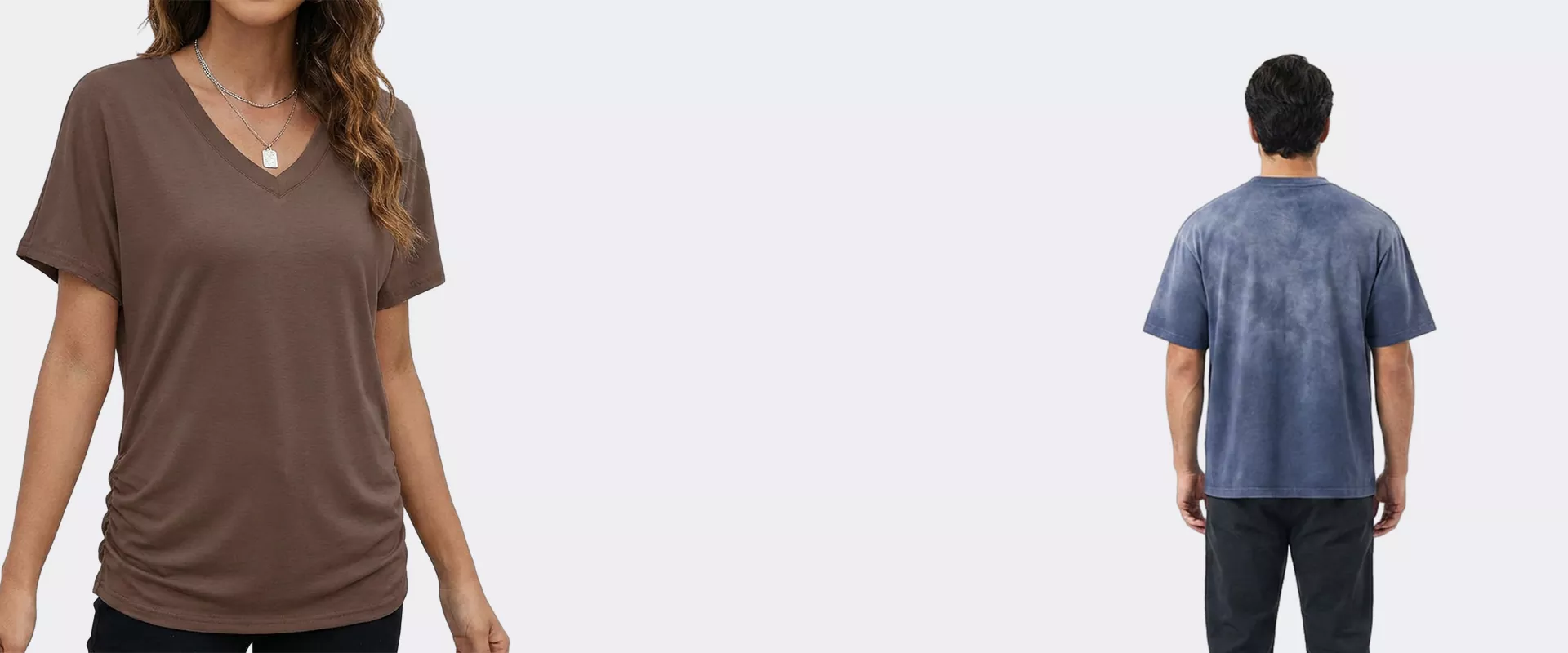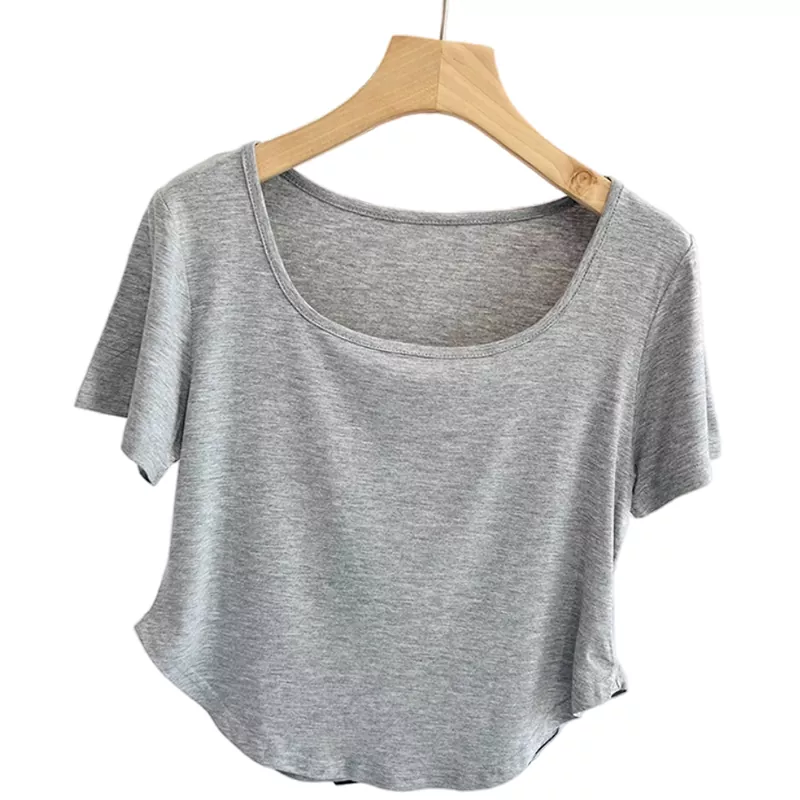

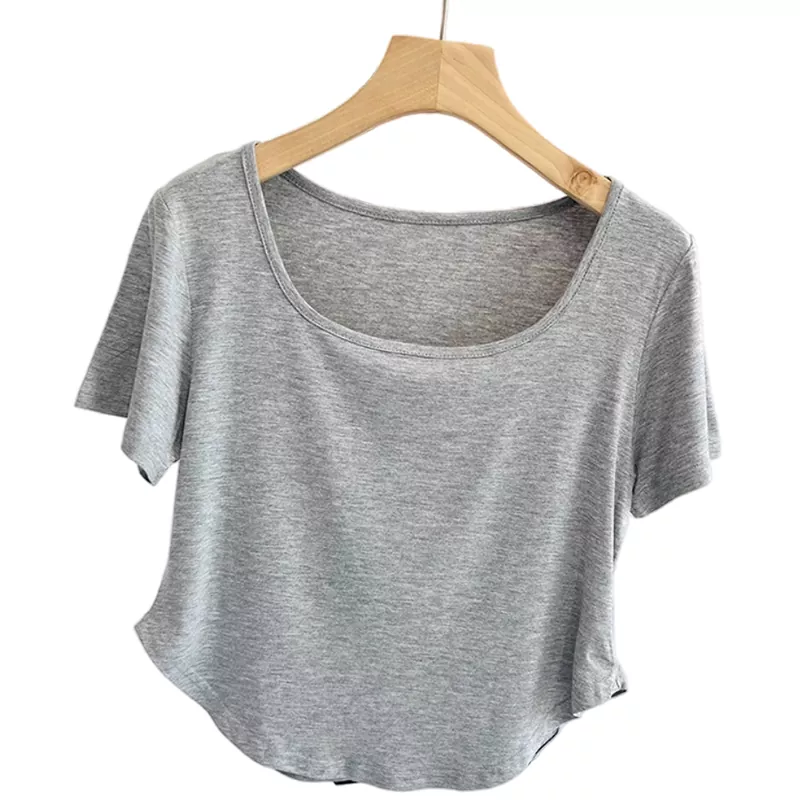
An oversized t-shirt adds volume everywhere with a dropped shoulder, wider body and longer hem; a boxy tee is wide but short and square; and a drop-shoulder simply means the shoulder seam sits below the natural shoulder line. They are distinct patterns, not a size up from a regular tee. Getting them right in production comes down to three things: the measurement points you specify, a fabric with enough weight to hold the shape, and clean pattern grading.
1. Oversized vs Boxy vs Drop-Shoulder vs Relaxed: The Terms Defined
These words get used interchangeably, but to a factory they mean different patterns. Getting the vocabulary straight is the first step to sourcing the right shirt, because a single wrong term can send a whole sample in the wrong direction.
| Fit | Shoulder seam | Body & length | Reads as |
|---|---|---|---|
| Regular | On the shoulder point | Follows the frame, standard length | Classic, neutral |
| Relaxed | At or just past the shoulder point | A little extra room, standard length | Roomy but shaped |
| Loose | Near the natural position | Roomy all over, no fixed streetwear cut | Casual, airy |
| Boxy | Small drop, near natural line | Wide and square, shorter (around the hip) | Sharp, architectural |
| Drop-shoulder | Clearly below the shoulder line | Roomy body, standard-to-long length | Relaxed streetwear |
| Oversized | Dropped and extended | Volume everywhere, longer sleeves & hem | Voluminous, statement |
The most useful distinction: boxy trades length for width and stops near the waistband for a square shape, while oversized keeps adding length and volume for full drape. Drop-shoulder is a construction feature that both can share, defined entirely by where the shoulder seam sits.
2. Sizing Up Is Not the Same as an Oversized Pattern
This is the single most common mistake, and it is worth understanding because it directly affects how you brief a supplier. Buying a larger regular tee scales every measurement up at once — a bigger neck, longer body, wider sleeves and a shoulder seam that slides off the arm in an uncontrolled way. A purpose-built oversized t-shirt pattern does the opposite: it places the extra room deliberately, so the volume lands where the design wants it and the proportions still read as intentional.
For a brand, the practical takeaway is that "make it oversized" is not a real instruction. A factory needs the pattern intent — which measurements grow, by how much, and where the shoulder sits — or you end up with a shirt that is merely big rather than well-cut.
3. The Measurement Points That Define the Fit
A fit lives in its measurements, not its label. When you develop an oversized, boxy or drop-shoulder tee, these are the points that create the silhouette and that you specify on a tech pack:
- Chest half-width — armpit to armpit, measured flat. The main lever for how roomy or voluminous the body is.
- Shoulder drop — how far the shoulder seam sits below the natural shoulder point. This is what turns a regular tee into a drop-shoulder one.
- Body length — from the high point of the shoulder to the hem. Short length reads boxy; longer length reads oversized.
- Sleeve length — longer and looser on oversized; more controlled on boxy.
- Sleeve / bicep width — wider openings amplify the box shape, but too wide starts to look sloppy.
- Hem width — a clean straight drop from the underarm keeps the shape sharp instead of flared.
- Neckline drop and opening — relaxed, slightly wider collars complete the casual look.
Exact figures vary by brand and product, so rather than chase a universal number, define the target measurements for your own size set and hold them across the range. That is the difference between a fit that looks designed and one that looks accidental.
4. Why Fabric Weight Makes or Breaks a Drop Shoulder
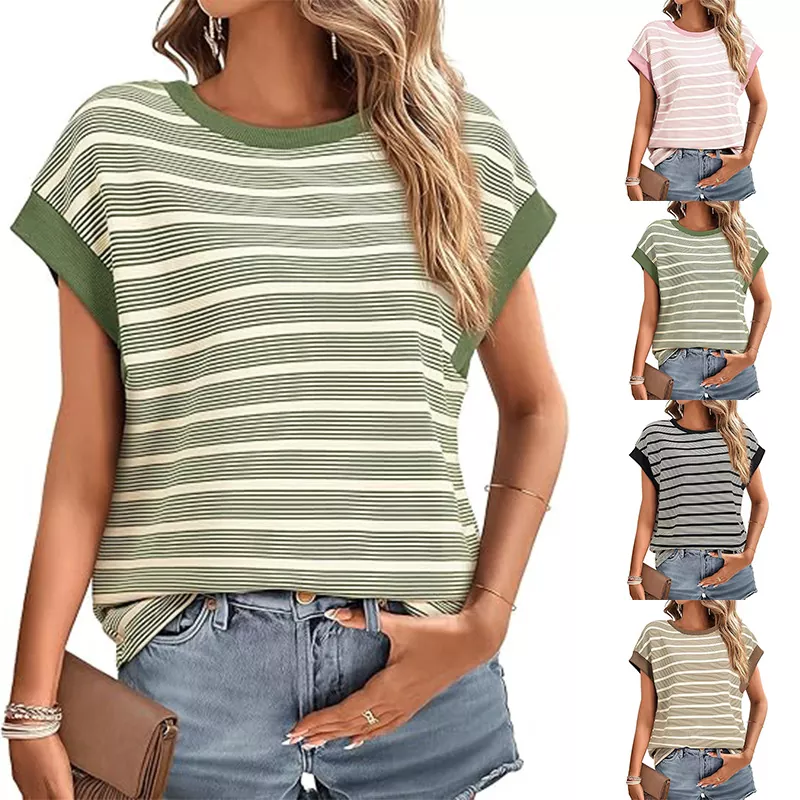
The pattern is only half the story — the fabric has to hold it. A drop shoulder relies on the cloth having enough body to keep a clean line at the lowered seam. In a fabric that is too light, the seam collapses, the armhole wrinkles and the whole shirt looks like a bag rather than a considered cut.
As a general guide, a midweight-to-heavyweight fabric of roughly 180 GSM and up supports most oversized styles, and structured boxy or heavyweight streetwear tees usually go heavier still for that dense, substantial drape. Because the ideal weight also depends on the fiber and knit, choose it alongside the pattern rather than after it. Our t-shirt GSM guide breaks down the weight bands, and the fabric guide covers which fibers and knits give a structured hand.
5. Where These Fits Go Wrong in Production
From a factory's chair, oversized and drop-shoulder tees fail in a handful of predictable ways. Knowing them helps you review a sample critically instead of just checking that it is "big enough."
- Collapsed shoulders. Too-light fabric lets the dropped seam sag; the shirt loses its line the moment it is off the hanger.
- Distorted armholes. A shoulder drop that is not matched by a redrawn armhole and sleeve leaves fabric stacking at the upper arm.
- Too wide and too long. Added width already lowers the visual center of gravity, so piling on length makes the shirt drag and lose proportion.
- Inconsistent grading. If the drop and width are not graded properly across sizes, the fit that looks great on a medium falls apart on the larger sizes.
A quick sample test many patternmakers use: gently shake the shirt — the shoulders should hold their shape, not fold like a sack. Clean drape with backbone is the target, not stiffness and not limpness.
6. How to Brief a Manufacturer for These Fits
To get a first sample close, give your supplier as much of the following as you can:
- The fit name and intent — oversized, boxy or drop-shoulder — plus a reference image or garment.
- Your target measurements for a base size across the points in section 3.
- The fabric and weight you want, or a request for a recommendation.
- Your size range and any grading notes, so the fit holds from smallest to largest.
- The decoration you plan, since print and embroidery placement interact with a dropped seam
A reference shirt plus a measurement chart is the fastest brief of all: it removes ambiguity and lets the patternmaker match a fit you already know works.
7. Matching the Fit to Your Market
| Your market | Fit to lead with |
|---|---|
| Streetwear / youth fashion | Oversized or drop-shoulder, heavier weight |
| Minimal / contemporary basics | Boxy, clean and structured |
| Everyday casual retail | Relaxed or loose fit |
| Premium / elevated basics | Boxy or oversized in heavyweight cotton |
| Unisex ranges | Drop-shoulder — the most forgiving across body types |
Drop-shoulder tends to be the safest anchor for a broad or unisex range, because the lowered seam flatters most frames and reads as intentional across sizes.
8. How GOODTEX Develops Your Oversized & Boxy Tees
At NINGBO GOODTEX IMP & EXP CO., LTD, oversized and loose-fit tees are already part of what we produce, so these fits are familiar ground rather than a special request. As an OEM and ODM manufacturer in Ningbo, China, we develop each style to your measurement points instead of a fixed block.
A team of 10 pattern makers works in Gerber and Lectra to draft your oversized, boxy or drop-shoulder pattern, redraw the armhole and sleeve to match the shoulder drop, and grade it cleanly across your size range — from S to XXXL, with custom sizing available. We will recommend a fabric weight that holds the shape, and a 20-person merchandiser and QC team checks the finished measurements against your specification to a BSCI-audited standard, with a team of around 170 people behind production. Sampling normally takes 7 to 15 days, so you can feel the drape and confirm the fit before committing to bulk. Send a tech pack or a reference shirt and we will match it.
Adding oversized or boxy styles to your line?
Send a reference shirt or your target measurements. We will pattern the fit, recommend the right weight, and sample it in 7–15 days.
Get a Fit & Sample QuoteExplore our casual t-shirt range, including men's t-shirts and women's t-shirts, or read about our production process.
9. Frequently Asked Questions
Oversized adds volume everywhere, with a dropped shoulder seam, wider body and longer sleeves and hem, for a relaxed, voluminous look. Boxy is wide and square but keeps a shorter length that sits around the hip and only a small shoulder drop, giving a sharp, structured shape. Drop-shoulder specifically refers to the shoulder seam being lowered below the natural shoulder point, and it is the feature most oversized tees are built around. The three overlap, but they are distinct patterns rather than one shape.
A drop-shoulder t-shirt is one whose shoulder seam sits below the wearer's natural shoulder line rather than on top of it. That lowered seam is the defining detail: if the seam has not moved, it is not a true drop shoulder. The result is a relaxed, casual drape that widens the shoulder visually and suits streetwear styling. It is a deliberate pattern change to the shoulder and armhole, not simply a larger size.
Usually no. A true oversized tee is patterned with the extra volume and length already built in, so you normally take your regular size and let the cut do the work. Sizing up on top of an oversized pattern can make the shirt look shapeless, with sleeves and shoulders that fall too far. Simply buying a larger regular tee is not the same as an oversized fit, because a larger regular size stretches every measurement rather than placing the volume where the design intends.
A midweight-to-heavyweight fabric works best, because a drop shoulder needs some body to hold a clean line. Very light fabric collapses at the lowered seam and lets the armhole wrinkle, which makes the shirt look sloppy rather than intentional. A weight from roughly 180 GSM upward supports most oversized styles, and structured boxy and heavyweight streetwear tees often go heavier still. The exact weight depends on the fiber and knit, so it should be chosen alongside the pattern.
The key points are chest half-width (armpit to armpit measured flat), shoulder drop (how far the seam sits below the shoulder point), body length from the high point of the shoulder to the hem, sleeve length, sleeve or bicep width, hem width and the neckline drop. These points, not the size label alone, are what actually create an oversized, boxy or drop-shoulder silhouette, and they are what you specify in a tech pack when sourcing the style.
Yes. GOODTEX is an OEM and ODM manufacturer that already produces oversized and loose-fit styles, and our pattern-making team develops oversized, boxy and drop-shoulder tees to your measurement points using Gerber and Lectra. We grade the pattern across your full size range, recommend a suitable fabric weight, and develop a sample in 7 to 15 days so you can check the drape before bulk. Send a tech pack or a reference shirt and our team will match the fit.